

TOP 10 WORST FAKE FOODS YOU SHOULD STOP EATING - Well-Being Wednesday
- Feb 24, 2016
- 5 min read
Are you sure that's food?
"Everything in moderation" is usually pretty sound advice, but let's face it: Some things you should just not put in your mouth. From artificial flavors and colors to words you'd need an advanced degree in chemistry to pronounce, there are thousands of ingredients making their way into your food that are simply not, strictly speaking, food.
Bottom line: Even though you can buy these 10 foods at the grocery store doesn't mean you should.





Crab Sticks
You may be thinking that you eat crab in crab sticks, but this name is misleading. Crab sticks are actually manufactured from a processed seafood made of finely cheap pulverized white fish flesh (called surimi), with different edible additions (crab extract, crab flavor, seasonings etc). Surimi is available in many shapes, forms and textures, and is often used to imitate the texture and color of the meat of lobster, crab, and other shellfish. In crab sticks it is shaped to resemble leg meat of a crab. It enables food manufacturers to take cheap fish and upgrade it to a taste of the most expensive fish meats such as crab or lobster. This could have been worse as fish is considered good for us, but still it’s not a crab and it’s still a highly processed product with many additives. The assortment of additives may include other fish products, but it is usually egg whites, oils, salt, monosodium glutamate (MSG) and various starches and gums to create the expected texture.
Maple flavored syrup
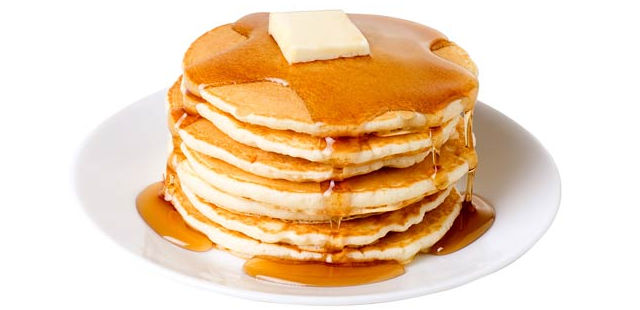
is a syrup usually made from the sap of the maple tree, and many people love genuine 100% maple syrup, but the cheap, fake syrup that is a mix of water, high-fructose corn syrup and caramel coloring is not what you are looking for. In the United States, “maple syrup” must be made almost entirely from maple sap, although small amounts of substances such as salt may be added. On the other had “Maple-flavored” syrups include maple syrup but may contain additional ingredients. “Pancake syrup”, “waffle syrup”, “table syrup”, and similarly named syrups are substitutes which are cheaper than maple syrup, and in these syrups the primary ingredient is most often high fructose corn syrup and they have no genuine maple content.
Chicken nuggets
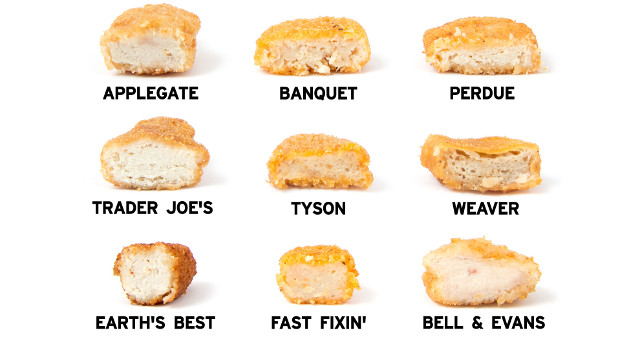
chicken nuggatsUsually chicken nuggets contain just 40-50% meat and have been battered and deep fried. The rest seems to belong more to an industrial factory but not to a food retailer. Chicken nuggets are sold in various portion sizes. We all know that white chicken meat is one of the best sources of lean protein, but what has happened is that some companies have chosen to use an artificial mixture of chicken parts rather than low-fat chicken white meat, batter it up and fry it. Chicken nuggets tend to have a high fat content because they are breaded and fried, and are high in calories, salt and sugar. Eating them occasionally will not kill you, but since they taste good, are cheap and convenient and kids love them, it’s easier to eat them more often.
White bread
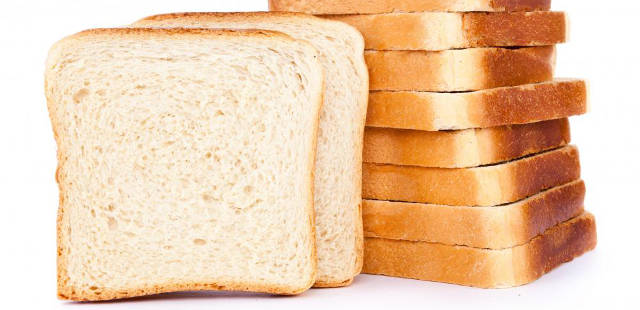
It has been known for a long time that white bread and refined grains in general aren’t particularly nutritious with all the nutrients taken out. As you know, whole grains are a good source of fiber and complex carbohydrates and can also improve your digestive system’s health, but when the flour is refined, it loses many of its nutrients. Refined grains are no longer a complex carbohydrate and are no longer a slow release source of energy. They need little digestion and are absorbed rapidly so increase glucose levels in the body. During the refining process of wheat, the germ and the bran is removed and this means that the most nutritious part of the grain including fiber, vitamins and minerals is lost. It can be fortified, but sometimes with cheapest form of minerals and vitamins that are poorly absorbed by the body.
“Cheez Whiz” cheese Dip
Cheez Whiz is a thick processed cheese sauce or spread, and many refer to it as ‘pseudo-cheese’. The yellow paste usually comes in a glass jar and is used as a topping for cheesesteaks, corn chips, hot dogs and other foods. The advantage of it is that it’s more spreadable and melts better than natural cheese. A single serving, which is defined as just two level tablespoons, contains nearly a third of a day’s recommended maximum of saturated fat as well as a third of the maximum sodium recommended for most of American adults. The problem is that if you sit in front of the TV and start dipping your crackers in it, it’s hard to stick to only 2 tablespoons. Also there are so many items listed in this product, starting with the watery by-product of milk called whey, canola oil, corn syrup, and an additive called milk protein concentrate, which manufacturers had begun importing from other countries as a cheaper alternative to the more expensive powdered milk produced by American dairies. So is it really a cheese, or perhaps more of a yellow-dyed paste?
High-fructose corn syrup (HFCS)
This is a cheaper alternative to cane and beet sugar, and in the United States it is among the sweeteners that have primarily replaced table sugar in the food industry. Due to US-imposed tariffs in the United States sugar prices are two to three times higher than in the rest of the world, which makes HFCS significantly cheaper, so that it is the principal sweetener used in processed foods and beverages. It is commonly used in breads, cereals, breakfast bars, lunch meats, yogurts, soft drinks, soups and condiments.
Critics of the extensive use of HFCS in food manufacturing argue that the highly processed substance is more harmful to humans than regular sugar. Also many health concerns have been linked to HFCS, which potentially contributes to obesity, cardiovascular disease, diabetes and non-alcoholic fatty liver disease.
Oreo - Chocolate that's not chocolate
The world’s most popular cookie is, believe it or not, vegan—which is great for animals, but a bummer for anyone expecting cream in the middle. That white stuff—creme, they call it—is a blend of canola oil, artificial flavors, sugar, and other suspect players. And sadly, the very last ingredient is chocolate
Mayonaise
Less of an impostor than a consumer mistake: This white spread doesn’t technically meet the official definition of “mayonnaise,” which requires at least 65% vegetable oil. What do you get instead? "Dressing," where the major players are water, soybean oil, and vinegar. Tasty? Sure. Mayo? No.
Peanut Butter
Peanut-flavored sugar oil doesn’t have quite the same ring, but it’s far more accurate a name than your average peanut butter. What shouldn’t contain added sugar typically has at least two types, plus partially hydrogenated oil (code for trans fat). What should be on the ingredients list? Peanuts. Period.
Orange Juice
Here’s what’s inside each bottle of Sunny D: high fructose corn syrup, and less than 2% of concentrated orange, tangerine, apple, lime, and grapefruit juice. Fruit concentrates are basically syrup, usually added to drinks and foods as additional sweeteners.
So choose real foods as much as possible and be more aware of what goes into your body.
To see more worst food take a look to the link below:
http://www.prevention.com/food/19-foods-that-arent-food/tea-thats-not-tea


Comments